

How To Repair Torn Ductwork
How to Repair Torn or Damaged Air conditioning Ducts
Bert spent 25 years working equally a dwelling-improvement and residential construction contractor in primal Florida.
A damaged duct system greatly reduces a heating and ac system's energy efficiency. Ideally, every bit of conditioned air goes directly from the furnace to the living space. In extreme cases, the energy lost from torn or damaged ducts far exceeds the price of the repair materials.
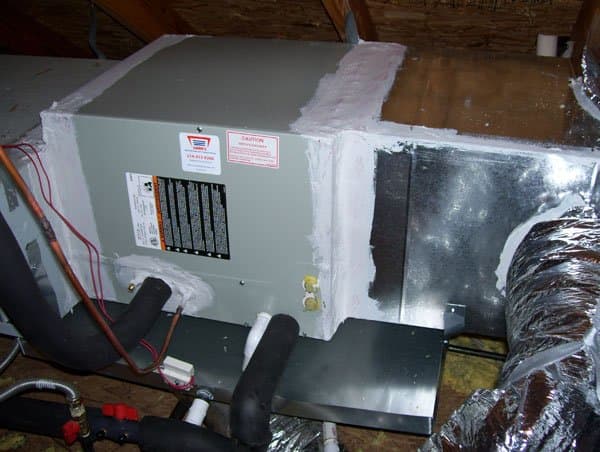
This air workout unit of measurement'south duct system uses a galvanized canvass metal plenum with flex duct accept offs.
https://www.flickr.com/photos/jackiebese/
Types of HVAC Duct
All duct systems serve the aforementioned purpose. Nonetheless, local building codes oft dictate the type of material used, its installation method and its location.
(Before nosotros get further, remember to ever habiliment the appropriate personal protection equipment: such as a grit mask, eye protection, and gloves.)
- Galvanized canvas metal systems: These systems start with a rectangular trunk line or plenum. The system then runs co-operative lines, made with either round sheet metal or smaller rectangular ducts, to the private flooring penetrations. Southward-shaped clips and cleats, often called s-locks and drives, hold the pieces of sheet metal ducts together; screws concur round sheet metal ducts together. Installers employ foil-backed duct tape or sheet metal compatible mastic to seal canvas metal duct. Some applications, such as attic or enclosed systems, need insulation to forbid condensation while using air conditioning.
- Fiberglass duct board: This type of duct uses compressed fiberglass boards with a foil outer layer. A foil-backed duct tape, mesh, and duct sealing chemical compound hold each joint together. Manufacturers offer ane-, i.5- or two-inch thick ridged fiberglass sheets.
- Flex duct: This easy-to-install and inexpensive type of duct contain 3 layers: an inner layer that uses a spiral wire rib to hold its shape, a fiberglass center layer that provides thermal protection and an outer layer that acts as a vapor barrier. When installing a flex duct, a technician slides the inner liner over a sheet metal neckband. Then he seals the inner liner with a lawmaking-canonical duct tape and locks it in place with a large nil tie or worm-gear clamp, called a duct strap. Installers frequently support flex ducts every four feet. This limits sags and keeps connections from pulling away from the collar.
- Spider systems: A spider system utilizes a centralized plenum that feeds multiple branch lines. Well-nigh co-operative lines connect to a boot which delivers air to an interior room. Yet, when the system needs more than ane plenum, a large branch line feeds each additional plenum.
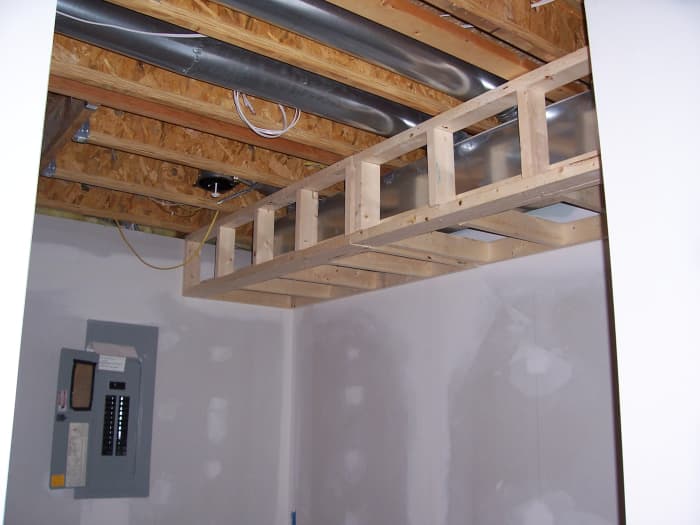
This sail metallic duct system runs between floor trusses.
Past Paul Cutler from Chaska, Usa (Flickr) [CC By 2.0 (http://creativecommons.org/licenses/by/2.0)], via Wikimedia Eatables
Many homes located in northern climates utilize galvanized sheet metal ducts. These ducts run through the floor joists. Rut radiating from these ducts helps warm the flooring. Occasionally the sealant loses its grip and allows heated air to escape.
- Betrayal the leaking seam: Loosen the hanging straps or brackets on both sides of the repair surface area. Lower the duct enough to examine the leaking joint. Normally this type of leak simply needs boosted sealant; however, large gaps should exist completely exposed and inspected. If a missing or incorrectly installed Due south-lock caused the large gap, take apart the joint and reconnect correctly.
- Repair the Due south-lock: When applicable, slice the old mastic from the perimeter of the articulation with a utility pocketknife. Remove any screws holding in the Due south-lock in place. Straighten the tabs on the ends of both drives and pull them from the joint. Separate the joint. Usually tension prevents complete separation. Slip the quondam S-lock from the joint. Open the South-lock with a screwdriver and slide it back into place. The flat metallic on each duct end should sideslip into the Due south-lock gap, the gap created by the screwdriver. Install the drives with a hammer.
- Seal the duct joint: Cover the joint with a 1/eight-inch thick layer of lawmaking-canonical duct mastic, using a paintbrush to smear the mastic. Manufacturers make mastic designed specifically for galvanized sheet metal ducts.
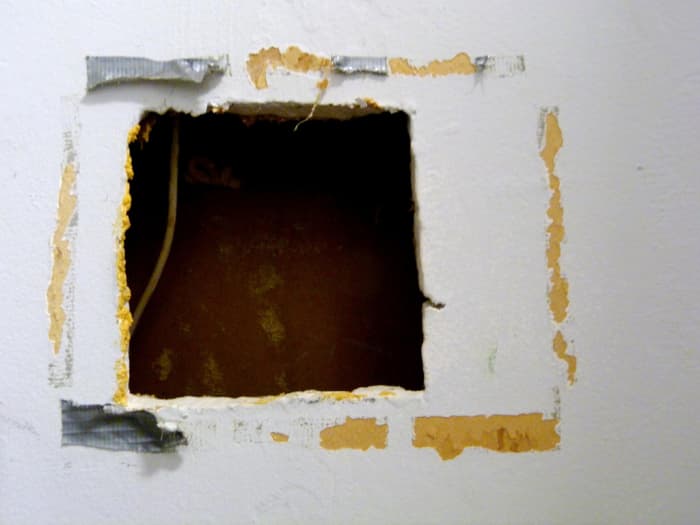
Cut fiberglass duct lath with a non-serrated knife.
https://www.flickr.com/photos/rusty_clark/
Fiberglass Duct Board
Heating and air-conditioning duct systems using fiberglass duct board rarely need maintenance or repair beyond an occasional interior cleaning. Professional duct-cleaning technicians use high-powered vacuums to evacuate grit buildup from the duct'southward interior surface. While this blazon of duct withstands moderate abuse, prolonged exposure to excessive moisture contaminates and destroys the fiberglass. Clammy sections frequently dry without any problems, however, due to mold concerns technicians often recommend replacing sections of saturated duct board.
Read More From Dengarden
- Bleed the duct: The fiberglass layer holds h2o like a sponge, and an intact foil backing prevents drainage. Place a bucket under the duct and poke a small-scale hole in the duct'southward foil outer liner with a screwdriver. Keep the bucket under the duct until it stops dripping.
- Cut out the damaged section: Forcefulness a non-serrated knife blade through the duct and cut out the moisture surface area. Use in and out motions. The notches on a serrated knife take hold of the foil backing's reinforcement threads, the triangle-shaped lines visible on the outside of the duct.
- Create a replacement patch: Either utilize the quondam section equally a template or measure the opening with a tape mensurate and transfer the measurements to a new sheet of duct lath. Cut the duct board with a non-serrated pocketknife.
- Install the patch: Insert the patch into the hole and press on the patch until its foil backing sits affluent with the existing duct'southward surface. Employ a piece of foil-backed duct tape to the seam, keeping the middle of the record centered over the seam. Press the tape with a squeegee. Cover the tape with a slice of mesh. Coat the mesh with a 1/8-inch thick layer of duct mastic, using a paintbrush as an applicator.
Repairing Other Types of Air Duct Systems
Many duct board systems demand the seam around the air handler or furnace repaired or sealed. This commonly occurs when the installer neglected to wipe all of the manufacturing oil and droppings from the air handler's surface, or he failed to seal around the entire exterior perimeter of the plenum.
- Remove old sealant: Cut away the old sealant, mesh, and tape with a knife. Wipe the exposed connection with a rag, removing whatever debris or oil.
- Supplant missing or damaged insulation: The duct board insulation must affect the furnace. Otherwise, condensation forms and becomes a breeding ground for mold and mildew.
- Cover the articulation with foil-backed duct tape: The tape should bond the plenum to the furnace.
- Apply mesh: Comprehend the duct record with mesh. In tight spaces employ a pigment stick to press the mesh confronting the tape.
- Seal the joint: Apply a ane/8-inch thick layer of duct mastic to the mesh with a paintbrush. Adhere a paint stick to the brush's handle to reach hard to get to areas. Allow the mastic harden, using the manufacturer's recommended dry out fourth dimension, then turn on the air handler and use a manus to experience for drafts.
In sure situations, such as when the home's design places the air-handler or furnace in a modest closet, a tight space prevents the installer from sealing portions of the duct's outer surface. In these cases, the installer must open up an access hole and seal the joint from the inside. When doing this, utilise circumspection to avoid dripping mastic onto the system'due south evaporator scroll.
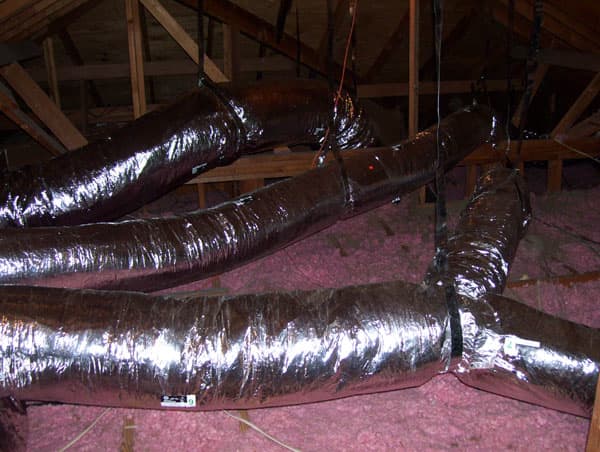
This ac system uses single pieces of flex duct to bridge across the attic
https://www.flickr.com/photos/jackiebese/
Flex Duct
Occasionally a home inspection reveals an exposed air-conditioning duct collar. This happens when pressure forces the outer liner and insulation abroad from the neckband. The exposed collar greatly reduces the system's energy efficiency.
- Solve the issue causing the exposed collar: Add a hanger strap adjacent to the slipping connection, relieving any tension. Place additional hanging straps throughout the duct run.
- Disconnect the loose liner: Cut the duct strap with wire cutters or pliers. Pull the insulation away from the connectedness. Adjust the outer liner, so it properly covers the insulation.
- Attach the outer liner: Apply mastic to the outer layer's butt edge. Slide the connectedness together and mash the material together until the mastic seals the connection, and then lock it in place with a duct strap. Cover the outside of the articulation with mastic.
Another common type of air conditioning duct damage is torn flex. Tears in the outer liner often happen when an installer drags a section of flex duct beyond roof trusses, and the outer liner catches on a boom or truss connector plate. Usually, the installer notices the harm and repairs it. However, occasionally the damage slips through the inspection and after the warranty period the problem becomes yours.
- Close the outer liner'south rip: Close the eye of the rip with a 6-inch department of duct record. Seal each side of the rip with duct tape, starting at the heart and working out.
- Seal the repair: Apply a piece of mesh across the length of the repair. Encompass the mesh with duct mastic. The mesh holds the mastic together, which prevents cracks later on it drys.
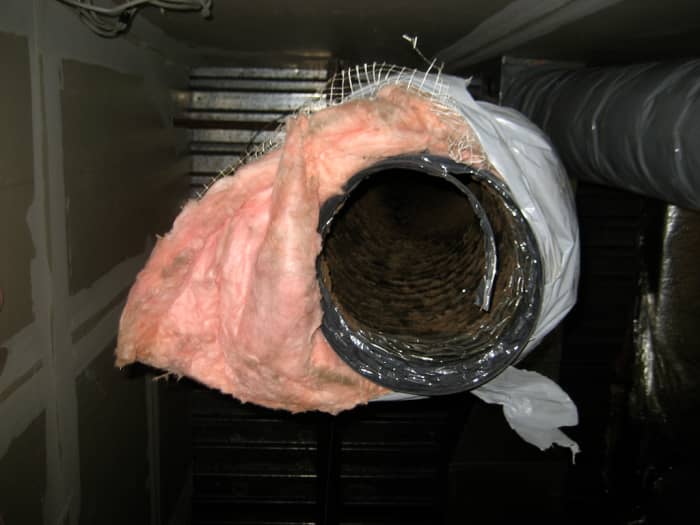
A knife cuts the flex duct'southward 3 layer and wire cutters snips the wire rib.
https://www.flickr.com/photos/peretzpup/
Replacing Flex Duct
In certain situations, such as a crushed duct or animal damage, information technology makes more than sense to supercede a section of flex duct than it does to repair it. The new section uses the original system's duct collars and hangers. The cost of materials and the location of the repair make this determination.
- Remove the damaged flex: If disassembling a flex connection, peel away the former duct seal and cut the duct strap. Pull the insulation away from the connecting, exposing the inner liner. Remove the duct strap and tape holding the liner in identify. Carefully slide the damaged duct off the collar. Skip to step 3. When removing a small department of flex duct, technicians slice through the duct with a pocketknife. The blade cuts all three layers at once and follows the inner liner's wire rib around the perimeter. Remove the pocketknife in one case information technology makes a full revolution, snip the wire rib with wire cutters.
- Install a Splice Connector: Fold the existing duct'due south outer liner over the insulation and slide it between the insulation and inner liner, leaving about four inches of the liner exposed. Sideslip a splice collar into the finish of the duct's inner liner and wrap the connection with duct record. Lock the inner liner against the splice collar with a duct strap. Push button the collar into the duct until the collar's rib rests flush against the insulation ringlet.
- Calculate the length of the replacement section: Measure the distance betwixt the existing ducts' collars and add together ii feet. Increment this calculation an additional one foot for each bend.
- Cut the new flex to the appropriate length: Stretch out the new flex duct to its full length. Roll the outer liner over the insulation and tuck information technology betwixt the insulation and the inner liner. Measure from the stop of the insulation roll to the advisable place on the duct and cut with a knife. Roll the outer liner over the insulation.
- Install new flex: Slide the inner liner over the splice collar, leaving about 1 inch of the collar exposed. Seal the connection with code-approved duct tape. Slip a duct strap over the inner liner and tighten information technology with the appropriate tool. Butt the new section'south outer liner and insulation against the existing ducts. Lock it in place with a duct strap. Seal the joints with duct tape or lawmaking-approved mastic.
This article is accurate and true to the best of the writer's knowledge. Content is for informational or amusement purposes only and does not substitute for personal counsel or professional advice in business concern, fiscal, legal, or technical matters.
© 2017 Bert Holopaw
Related Articles

Source: https://dengarden.com/home-improvement/How-to-Repair-Torn-or-Damaged-Air-Conditioning-Duct
Posted by: smithyouslovis.blogspot.com
0 Response to "How To Repair Torn Ductwork"
Post a Comment